Are builder incentives in Conyers as good as they look? When you see a big closing credit or a tempting rate buydown, it is normal to wonder what it really means for your payment and cash to close. With a little structure, you can compare offers across Rockdale County communities with confidence. In this guide, you’ll learn how each incentive works, what loan rules matter, and a simple worksheet you can use to pick the best deal for you. Let’s dive in.
Conyers new‑home context
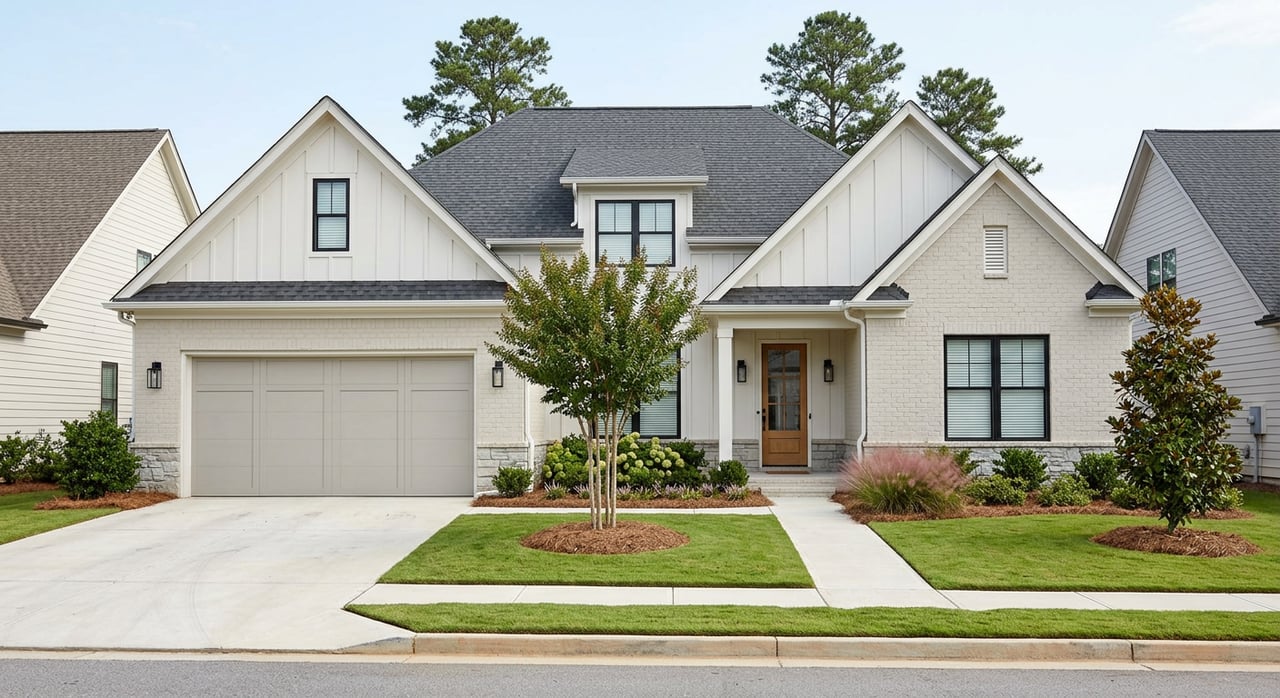
New construction is active around Conyers and Rockdale County, and many communities price in the low to mid $300,000s. Pricing and promotions change often, so check live community pages for the latest offers. For example, you can review current promotions and models at Lennar’s Millers Pointe on a builder marketplace page that updates frequently. Visit the community listing for Millers Pointe to see what is currently advertised and how incentives are described.
Property taxes and HOA dues can vary by neighborhood. Rockdale County publishes millage rates and tax details in its comprehensive financial report. Be sure to include estimated property taxes and HOA dues in your comparison, since incentives at closing will not change your ongoing monthly costs.
- Explore a current Conyers builder community example: the Millers Pointe listing shows typical marketing for mortgage and title partnerships and any promotions offered. See the community page for Millers Pointe on the builder marketplace.
- Review Rockdale County’s financial report for millage rates: this helps you estimate your property tax share for a given price point.
Review the Millers Pointe community page
Check Rockdale County’s millage and tax tables
Incentive types and what they mean
Closing cost or “flex cash” credits
Builders often offer a flat dollar credit toward your closing costs or prepaids. This lowers your cash to close, but your lender must treat it as a seller or interested‑party contribution. Conventional loans cap these contributions by down payment and occupancy, so large credits may be limited. Review the Fannie Mae guidance on Interested Party Contributions to see what counts and how caps work.
See Fannie Mae’s IPC rules
Design center credits and allowances
A design allowance is money you can spend only at the builder’s studio on options like flooring and fixtures. It does not reduce the contract price, and many buyers spend beyond the allowance. Treat this like store credit: great for finishes you want, but not cash you can redirect to closing costs.
Temporary and permanent rate buydowns
- Temporary buydown: Common formats are 2‑1 or 3‑2‑1. Your payment starts lower for one to three years, then steps up to the full note rate. Lenders generally must qualify you at the full note rate, not the reduced first‑year rate. Funds for the subsidy are placed in a buydown escrow and applied to your payment schedule. Review how temporary buydowns are underwritten and funded.
- Permanent buydown (discount points): You or a third party pay points at closing to lower the interest rate for the life of the loan. One point equals 1 percent of the loan amount. Ask your lender to show the par rate and the exact points‑for‑rate schedule so you can see the monthly savings and a break‑even timeline. The CFPB has a helpful explainer on points and lender credits.
How temporary buydowns are treated in underwriting
How to use points and lender credits
Free upgrades, lot‑premium credits and price cuts
Free appliance packages, upgrade bundles and lot‑premium credits can stretch your finish budget. Ask whether they will be shown as a price reduction or as a seller credit on the contract. Short‑term price drops on inventory homes can be attractive, but compare the net contract price after any credits to see the real difference.
Loan rules that can change the math
Contribution caps by loan type
- Conventional (Fannie Mae/Freddie Mac): Financing concessions from sellers and other interested parties are capped, most often in 3 percent, 6 percent and 9 percent tiers depending on down payment and occupancy. If concessions exceed limits, the excess is treated as a sales price reduction for underwriting and appraisal. Review the Fannie Mae IPC guidance for details.
- FHA: Seller and third‑party contributions toward closing costs, prepaids and discount points are generally capped at 6 percent of the sales price. See HUD’s guidance.
- VA: Most seller concessions, including buydowns funded by the builder, are generally limited to 4 percent of the reasonable value. See VA’s temporary buydown page for the specifics.
Fannie Mae IPC overview
FHA seller contribution reference
VA buydown and concession guidance
Appraisal treatment of concessions
Appraisers can adjust comparable sales for financing concessions. If incentives are large or structured in nonstandard ways, the appraised value used for financing may be reduced. That can create a gap between your loan amount and the contract price if not planned in advance. Fannie Mae outlines how appraisers adjust for comparable sales.
How appraisers adjust for concessions
Temporary buydowns do not boost qualification
A lower first‑year payment from a 2‑1 or 3‑2‑1 buydown does not typically change your debt‑to‑income calculation, because lenders must qualify you at the full note rate. Treat the first‑years’ payment relief as a cash‑flow cushion, not as extra qualifying power.
Disclosures and apples‑to‑apples comparisons
Ask for multiple Loan Estimates so you can compare the same house with and without the incentive. The CFPB’s comparison tool shows exactly which fields to line up: interest rate, APR, cash to close and total costs. You will see quickly whether a big credit is offset by a higher rate, or whether points meaningfully lower your APR.
Compare Loan Estimates side by side
A note on taxes and points
Points you pay to buy down the rate on a principal residence may be deductible if IRS rules are met, and seller‑paid points are often treated as paid by the buyer for tax purposes. Tax treatment depends on your situation, so always consult a tax professional. For background, review the IRS publication on homeownership.
IRS publication on homeownership and points
A simple method to compare offers
Use this seven‑step process for each Conyers community you are considering.
- Identify the incentive type
- Is it a price reduction, a closing‑cost credit, a design‑center allowance or a temporary or permanent buydown? If the deal requires you to use a preferred lender or title company, mark that condition clearly.
- Get the builder’s incentive worksheet in writing
- Ask for an itemized breakdown that shows where each dollar appears on the contract and Closing Disclosure, and any requirements to use preferred partners. If the builder cannot provide it, consider that a red flag.
- Convert to dollars and monthly impact
- Closing‑cost credits: dollar value equals the credit amount.
- Design allowances: dollar value equals the allowance, but note that buyers often exceed the allowance.
- Permanent buydown: confirm the par rate and the exact points‑for‑rate schedule. Ask your lender to show the monthly savings and a break‑even month count.
- Temporary buydown: request the buydown agreement with the month‑by‑month subsidy. Remember, you will be qualified at the note rate.
How temporary buydowns are documented
How to evaluate points and credits
- Pull two Loan Estimates for the same home
- Option A: No incentive at par pricing.
- Option B: Incentive applied as advertised.
Compare interest rate, APR, total cash to close and total loan costs.
Use the CFPB tool to compare
- Calculate your effective net price
- Start with the contract price. Subtract any true price reductions and credits that reduce your cash to close. For buydowns, list the total subsidy for the first one to three years and compare it to a straight credit. Weigh the result against how long you plan to keep the loan.
- Check contribution caps and appraisal impact
- Make sure total seller and interested‑party contributions stay under your program’s limit. If they exceed caps, the excess will be treated as a price reduction for underwriting and appraisal, which can change your loan terms.
Review conventional IPC limits
- Put every incentive into the contract
- Ensure the purchase agreement or a signed addendum clearly states the incentive, who funds it, any partner requirements and, for temporary buydowns, the buydown agreement and escrow details. If something was promised verbally, request a written amendment.
Fill‑in worksheet you can copy
Use this template to compare two communities or two homes in the same community:
| Comparison Item |
Community A |
Community B |
| List price |
|
|
| Price reduction (if any) |
|
|
| Builder closing‑cost credit |
|
|
| Design‑center allowance |
|
|
| Incentive conditions (preferred lender/title?) |
|
|
| Permanent buydown: points paid and new rate |
|
|
| Temporary buydown: total subsidy years 1–3 |
|
|
| Estimated property taxes and HOA dues |
|
|
| Cash to close with incentive |
|
|
| Monthly P&I year 1 and at full rate |
|
|
| Break‑even months on points vs credit |
|
|
| Effective net price to you |
|
|
Negotiation tips and red flags
- Bring your own buyer’s agent. The model‑home agent represents the builder. Your agent can request the incentive worksheet, collect multiple Loan Estimates and flag contract language that needs clarity.
- Ask for the buydown agreement and proof of buydown escrow funding before you sign. This protects you from surprises at closing and aligns with lender documentation rules for temporary buydowns.
- Watch for strings. Be cautious if an incentive is offered only with a specific lender or title company but the written terms are vague. Insist on full cost comparisons from any preferred lender.
- Spot common red flags. Refusing to write incentives into the purchase agreement, verbal‑only promises, or incentives tied to mandatory high‑priced upgrades are all reasons to pause.
Here is a simple script you can use when you call a sales office:
“Hi, I’m interested in [community/home]. Is the closing‑cost credit tied to your preferred lender or title company? Please email the current incentive worksheet and, if you are offering a temporary buydown, the buydown agreement that shows how funds are escrowed and applied. I would like to review both before writing an offer.”
Quick checklist
- Get the builder’s incentive worksheet and addendum in writing. Do not rely on flyers or verbal promises.
- Ask whether the deal is a price reduction or a seller credit, and request both scenarios in writing.
- Get two Loan Estimates: one at par without incentives, one with incentives applied. Compare rate, APR, cash to close and total costs.
- Confirm how temporary buydown funds are escrowed and who controls them. Ask for the buydown agreement.
- Check your loan program’s seller contribution limits before you commit.
- Have your buyer’s agent review all incentive and contract language before you sign.
Compare Loan Estimates with the CFPB tool
Review temporary buydown requirements
See Fannie Mae IPC limits
Choosing the right combination of price, credits and rate matters more than any single headline offer. When you look at cash to close, monthly payment over time and ongoing taxes and dues, the best choice usually becomes clear. If you want a second set of eyes or help negotiating with a builder, our local team is here for you.
Ready to compare real numbers across Conyers communities? Reach out to Platinum Key Realty of Georgia for a friendly, no‑pressure consult and a side‑by‑side breakdown tailored to your loan type and budget.
FAQs
What counts as a seller contribution under conventional loans?
- Fannie Mae treats most builder‑paid closing costs, prepaid items and discount points as interested‑party contributions that are capped by down payment and occupancy; amounts above the cap are treated as a price reduction for underwriting.
How do 2‑1 or 3‑2‑1 buydowns affect my approval?
- Lenders generally must qualify you at the full note rate, not the reduced first‑year payment, so a temporary buydown helps cash flow early on but does not usually increase what you qualify to borrow.
Can a builder pay all my closing costs on an FHA or VA loan?
- FHA generally caps seller and third‑party contributions at 6 percent of the price, and VA limits most seller concessions to 4 percent of reasonable value, so a builder typically cannot cover unlimited costs.
Will incentives change my property taxes or HOA dues in Rockdale?
- No, closing‑time incentives do not change ongoing costs like property taxes or HOA dues; use the county’s published millage rates and the community’s HOA to estimate your monthly obligations.
Are points tax‑deductible if the builder pays them?
- Points on a principal residence may be deductible if IRS rules are met, and seller‑paid points are often treated as paid by you for tax purposes, so speak with a tax professional for advice on your situation.