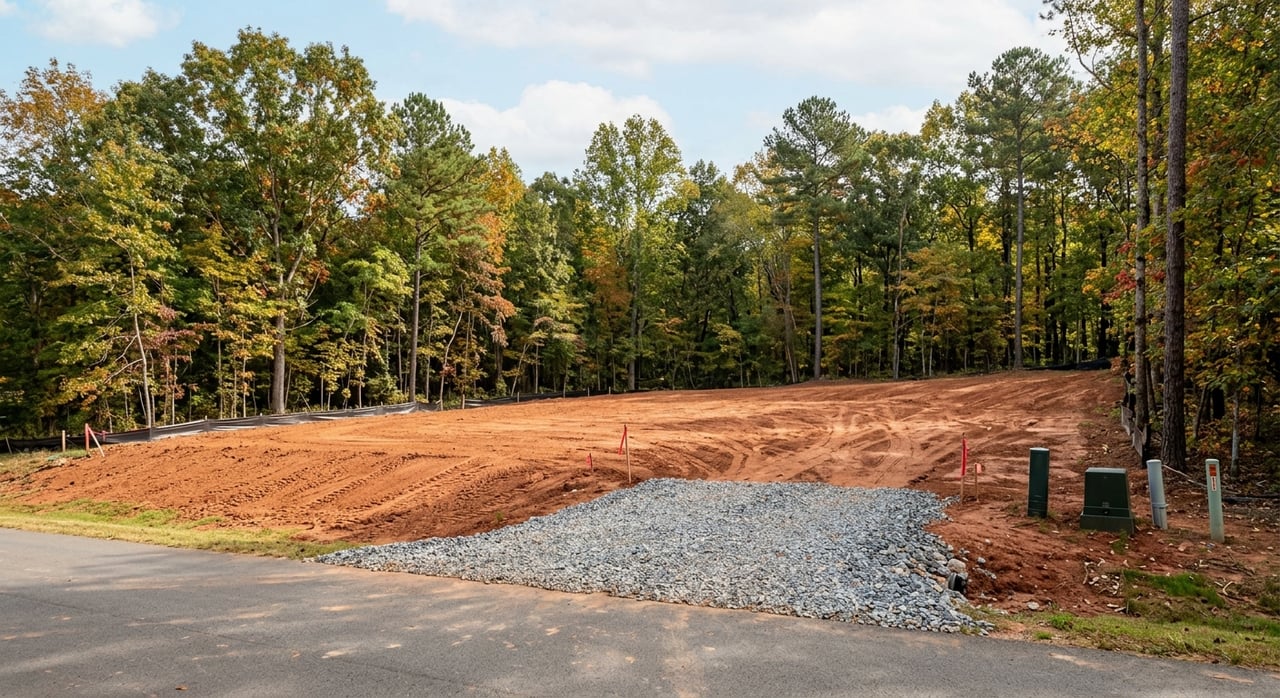
Buying Land Near Athens GA for Your Custom Home
Thinking about building a custom home near Athens? Buying land can feel exciting at first, then quickly turn overwhelming once you realize the lot itself can shape what you can build, how long it takes, and how much it costs. If you want to make a smart move, it helps to understand zoning, utilities, site conditions, and county review before you buy. Let’s dive in.
Before you picture floor plans or front porches, make sure the parcel actually fits your goals. In Athens-Clarke County, public map tools such as the Interactive Planning Commission Map, GIS Data Viewer & Printer, and Tax Assessor Parcel Information are key starting points for checking parcel boundaries, zoning, and surrounding conditions.
This step matters because single-family zoning districts in Athens-Clarke County can have very different rules. Depending on the district, minimum lot area can range from 40,000 square feet in RS-40 to 5,000 square feet in RS-5. Front-yard setbacks and maximum lot coverage also vary, which can directly affect the size and placement of your custom home.
Athens-Clarke County is also actively updating its Future Land Use Map as part of its broader planning framework. That means it is smart to look not only at what a parcel is today, but also at how the surrounding area may be planned for the future.
A lot may look large enough on paper but still have limits that affect your build. Setbacks, lot coverage, and height-related setback adjustments can reduce the usable building area more than many buyers expect.
That is why a parcel should be reviewed as a build site, not just as acreage. A beautiful piece of land only works for a custom home if the county standards allow the home footprint, driveway, and other improvements you have in mind.
If you are buying land to split, recombine, or develop into multiple lots, the process can change quickly. In Athens-Clarke County, preliminary plats are required when more than five lots are being developed or when public street construction is involved.
Site review can also be required for projects with more than 10 lots, more than 2 acres, attached single-family units, lots under 8,000 square feet, or residential density above 2.5 dwelling units per acre. If your plan involves anything beyond building on one existing lot, these thresholds are important to know early.
Utility access can make or break a land purchase. Athens-Clarke County Public Utilities provides water delivery and sewer collection only, and the county says water serves about 99% of the population while sewer serves about 75%.
If a parcel is not connected to sewer, it will typically rely on a septic system. That can be completely workable, but it adds another layer of due diligence before you commit to the purchase.
The county can help confirm whether an address receives county water or is billed for sewer. Electricity and gas service need to be confirmed separately with providers such as Georgia Power, Jackson EMC, Walton EMC, and Atlanta Gas Light.
This is one of the most important early checks because service availability can affect both cost and construction timing. A lot that seems like a great value may require more utility coordination than you expected.
If your build will need new utility work, there is more to plan for than simply submitting a request. Athens-Clarke County notes that separate water and sanitary sewer applications may be required, utility installations must be coordinated, contractors must be approved, and easements must be recorded before additions are accepted into the system.
That means utility planning should happen early, ideally before you finalize your land purchase. Delays in this stage can affect the whole construction timeline.
A parcel needs legal and practical access, not just road frontage on a listing sheet. In Athens-Clarke County, any work in the county right-of-way and any driveway construction accessing an ACC roadway requires county permitting review.
That is why it is wise to verify the likely driveway location before closing. If the best access point creates engineering or permitting issues, the lot may be less flexible than it first appears.
Raw land is never just raw land. The physical features of the property can affect home placement, drainage, clearing costs, septic viability, and permit approvals.
Athens-Clarke County’s construction plan checklist calls for detailed site information such as topographic and boundary survey data, drainage ways, environmental buffer zones, public utility easements, and the locations of streams, wetlands, 100-year floodplains, ponds, and other significant landscape features. These are not small details. They are central to whether your lot is truly buildable for your plans.
Slopes and low areas can influence where your home, driveway, and drain systems can go. Even if you love the setting, grading and drainage challenges can increase cost and complexity.
For some projects, stormwater review will also come into play. Athens-Clarke County requires a stormwater management conference before plan submittal for projects that disturb more than one acre, are within 200 feet of state waters, or create or replace 5,000 square feet or more of impervious surface.
Stormwater plans must be prepared by a Georgia-registered professional engineer or landscape architect. This is one more reason to involve experienced professionals early if your lot has slopes, water features, or a larger building footprint.
Water features can add beauty to a homesite, but they can also limit what you can do. County permitting guidance says Georgia requires a 25-foot buffer from the point of wrested vegetation for state waters, while Athens-Clarke County requires a 75-foot buffer from the streambank for most perennial streams.
If a stream, wetland, or floodplain crosses the parcel, the usable build area may be smaller than it appears. A lot line does not equal a build line, which is why mapping and site review are so important.
If the parcel is not on sewer, septic review becomes a major part of your due diligence. Athens-Clarke County says about 25% of households use septic systems, so this is a common issue for land buyers.
For a new septic application, the county says you will need a plat with topo information, a Level III soil report, and any water wells in the area. Health department review is separate from the county planning process, so it must be submitted separately.
Soil suitability and drainfield space are often the biggest questions on raw land. A parcel that cannot support the septic system you need may not support the home you want.
Trees can be a major asset on a custom-home site, but they can also create limits. Athens-Clarke County says trees in the public street right-of-way cannot be removed without approval.
The county also requires a right-of-way encroachment permit for activity within the tree protection zone of an ACC tree. If your vision includes clearing near the road or changing access points, this should be checked early.
One of the biggest mistakes land buyers make is trying to solve every issue after closing. In Athens-Clarke County, it is often better to coordinate site review early so you understand whether your lot, home plan, and utility needs can work together.
The county offers pre-submittal options such as Visioning Meetings and Concept Reviews. These can help identify issues before you get too far into design and permitting.
Athens-Clarke County separates building permits, site permits, and miscellaneous permits. Site permits include land disturbance activity permits and utility line extension permits, which means the process often involves more than just applying for a building permit.
The county’s review process is also multi-departmental. Planning coordinates review, while departments such as Transportation and Public Works, Public Utilities, Environmental Health, and Building Inspections each have their own review items.
The county handbook says site plans can be approved before building plans, but site plans must be approved by all reviewing departments before a building permit can be issued. In simple terms, the lot has to work before the house can move forward.
That is why your builder, surveyor, engineer, and local real estate team should be aligned as early as possible. A coordinated approach can help you avoid buying a parcel that looks promising but turns complicated under review.
Once a project is approved through plans review, Athens-Clarke County generally requires permits to be pulled within six months of approval. Work must begin within six months of permit issuance, and a permit can expire if work is not substantially completed within two years.
At the end of the process, the project is not complete until the Building Inspections Department issues a Certificate of Occupancy or Certificate of Completion after final inspections and payment of outstanding fees. Knowing these timing rules can help you plan your build more realistically.
If you are comparing parcels near Athens, keep this checklist handy:
When you buy land for a custom home near Athens, you are not just buying a location. You are buying a set of possibilities and constraints that need to work together.
In Athens-Clarke County, the best land decisions usually come from looking at the whole picture: zoning, utilities, access, drainage, buffers, septic, and permitting. If you take the time to evaluate those pieces before you close, you can move forward with much more confidence.
If you are exploring lots or acreage and want a local team that understands how land, new construction, and the buying process fit together, connect with Platinum Key Realty of Georgia for guidance tailored to your next move.

We pledge to be in constant communication with our clients, keeping them fully informed throughout the entire buying or selling process. We believe that if you’re not left with an amazing experience, we haven’t done our job. We don’t measure success through achievements or awards, but through the satisfaction of our clients.

Platinum Key Realty of Georgia
1677 Highway 78 Monroe GA 30655